
RETIREMENT PLANNING IN GERMANTOWN, WI
Financial Planning for a Confident Future
Most people spend 30 or 40 years accumulating savings and almost no time learning how to spend them. Retirement planning germantown wi households often start with the same worry: not whether they've saved enough, but whether it will actually last.
From Saving to Spending — Do You Have an Income Plan?
For decades, the goal is simple — save as much as you can. But when retirement arrives, the question changes completely. It's no longer about how much you've accumulated. It's about whether your money can reliably pay you every month for the rest of your life. That shift — from accumulation to distribution — is one of the most underestimated transitions in personal finance.
A retirement income strategy answers the practical questions: Which accounts do you draw from first? How much can you safely withdraw each year without running out? How do Social Security, pensions, and investments work together? Getting this right can make a meaningful difference in how long your money lasts — and how confident you feel in retirement.
Make Your Savings Work for You
A financial planner Germantown, WI households trust will treat your accounts as one system, not a pile of separate balances. Retirement income planning Germantown WI is about sequencing: which account you draw from first, how much comes out each year, and how withdrawals interact with your tax bracket. Done well, this decision often does more for your long-term security than any single investment pick.
Make Tax-Efficient Retirement Decisions
Roth conversion planning in Germantown, WI is worth a serious look in the years after you stop working but before Social Security or required minimum distributions begin. Converting a slice of a traditional IRA or 401(k) in a lower-income year can shrink future tax bills. Convert too aggressively, though, and you can push yourself into a higher bracket for no good reason.
Build Social Security Into Your Retirement Plan
Unlike almost every other retirement decision, claiming Social Security is permanent. Social Security planning Germantown, WI means weighing your health, other income, and, for couples, how spousal and survivor benefits interact before you file. The gap between claiming early and waiting can add up to tens of thousands of dollars over a lifetime.

Local Retirement Guidance You Can Trust
A retirement advisor germantown wi can meet you in person and understands Wisconsin's tax treatment of retirement accounts and the cost of living in communities like Germantown and Menomonee Falls. If you're looking at retirement planning near Germantown, WI, that local context is what turns a plan into one you can trust.
FAQ
Frequently Asked Questions
Do I really need a retirement advisor, or can I plan this myself?
Plenty of people manage parts of retirement planning on their own, but coordinating withdrawal order, Roth conversions, and Social Security timing at once is where most self-directed plans lose money. An advisor's value is usually in catching the interactions between these decisions, not any single piece.
What's the right age to start Roth conversions?
There's no single answer, but the years between retiring and either claiming Social Security or starting required minimum distributions are often the sweet spot, since income and tax brackets tend to be lower then.
Should my spouse and I claim Social Security at the same time?
Not necessarily. Spousal and survivor benefits can make it advantageous for one spouse to claim earlier and the other to wait, depending on age gaps and each person's benefit amount.
How often should a retirement income plan be reviewed?
At least annually, and after any major life event, a market downturn, a health change, or a shift in spending needs all justify a second look.
Ready to See Your Numbers?
Take a few minutes to see where your plan stands today.
Where Will Your Retirement Income Come From?
Most retirees draw income from several sources — rarely just one. Understanding each source and how they interact is the foundation of a solid retirement income plan.
Social Security
For most retirees, Social Security is the backbone of monthly income. When you claim — and whether you coordinate with a spouse — can significantly affect the total benefit you receive over your lifetime.
Investment Withdrawals
Your 401(k), IRA, and taxable accounts are likely your largest income source after Social Security. A withdrawal strategy determines how much you take, in what order, and how to manage the tax impact.
Pensions
If you have a defined benefit pension, it provides predictable monthly income for life — similar to Social Security. Understanding your payout options (lump sum vs. monthly) is an important decision to get right.
Annuities
An annuity can convert a portion of your savings into guaranteed income, reducing the risk of outliving your money. They're not right for everyone, but in the right situation they can add meaningful security.
Part-Time Work
Some retirees choose to work part-time in early retirement — for income, structure, or both. Even modest earnings can reduce how much you need to draw from savings in those critical early years.
Social Security Planning
When You Claim Social Security Could Be Worth Tens of Thousands
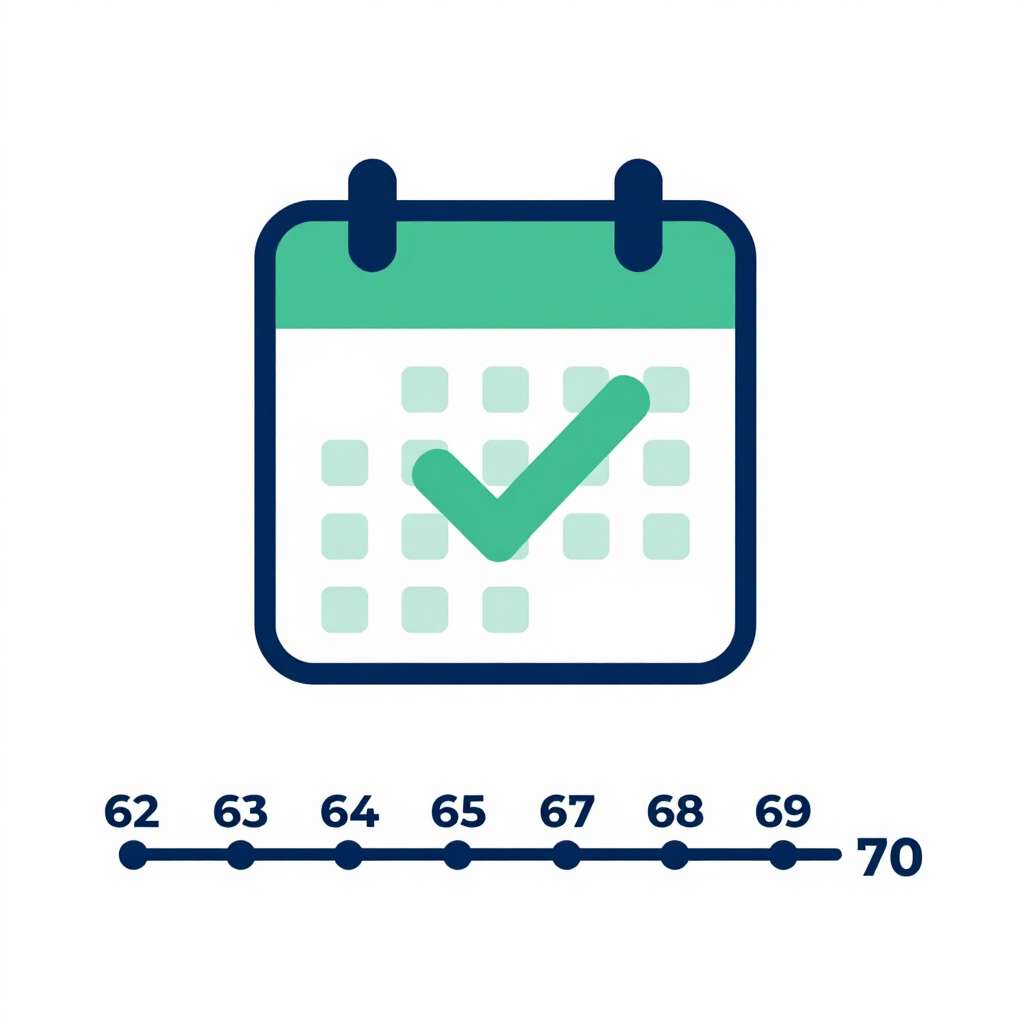
Social Security may be the most consequential financial decision you make in retirement — and yet most people claim it without a clear strategy. The difference between claiming at 62 versus waiting until 70 can be as much as 76% more in monthly benefit.
Married couples face even more complexity: coordinating spousal benefits, survivor benefits, and the right sequence of claims can add significant lifetime income that's easy to leave on the table without guidance.
Social Security claiming strategy is one of several retirement planning topics covered in depth on this site. Understanding the rules — and running the numbers for your specific situation — is an important step toward a confident retirement.
See How Your Retirement Income Could Look
Use the Retirement Calculator to model income scenarios from your actual savings and timeline. Or take the Retirement Assessment to see how your overall plan stacks up — and whether you're on track.
No account required. Free to use. No obligation.