What to Expect From a Retirement Readiness Assessment in Wisconsin
Planning for retirement can feel difficult when you are unsure whether your current savings, income, and goals are working together. A retirement readiness assessment in Wisconsin can provide a clearer picture of where you stand and which areas may need more attention before retirement.
The assessment reviews important parts of your financial situation, including savings, expected income, expenses, taxes, retirement timing, and goals. It can also highlight potential gaps and suggest practical next steps. Understanding what the assessment includes can help you prepare useful information and make the process easier to understand.
What Is a Retirement Readiness Assessment?
A retirement readiness assessment is a review of your current financial situation compared with the retirement lifestyle and goals you have in mind. Instead of looking at only one part of your finances, the assessment considers several factors that can influence your retirement outlook.
According to Will We Have Enough, the assessment is designed to show where you stand today, identify areas that are strong or may need attention, and provide suggested next steps. The tool is educational and is not a substitute for personal financial advice.
The assessment can help you understand:
- How your current savings compare with your retirement goals.
- Whether your expected income may cover your projected expenses.
- Whether your retirement timeline is progressing as planned.
- Which areas may deserve closer attention before retirement.
What Information Will You Need?
You do not need to have every financial number perfectly calculated before starting. The assessment asks for information that helps create a clearer picture of your current position and future plans.
The website explains that useful information can include your current savings balance, monthly income, expected retirement age, and what you want your retirement to look like. Estimates are acceptable, so you do not necessarily need exact figures for every question.
For a more complete assessment, you may also need information about:
- Current retirement account balances.
- Expected retirement income.
- Pension income, if applicable.
- Outstanding debts.
- Regular monthly expenses.
- Your target retirement age.
- Major upcoming financial expenses.
- Your location and lifestyle goals.
Having more complete information can help produce a more useful assessment of your retirement situation.
What Does the Assessment Measure?
The assessment looks at several areas rather than focusing only on how much money you have saved. This broader approach can help you understand how different parts of your retirement plan may work together.
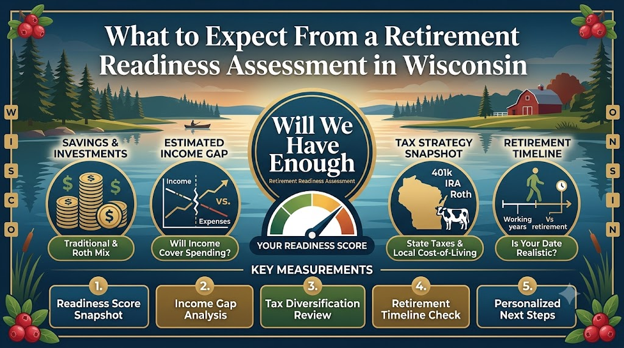
One important part is your retirement readiness score, which provides a quick snapshot based on your savings, timeline, and goals. Another part is the income gap analysis, which looks at whether projected retirement income may cover expected expenses and identifies the potential difference.
The assessment also looks at:
- Your retirement timeline and savings pace.
- Your expected retirement income and expenses.
- Your current savings mix.
- Your retirement goals.
- Potential areas that may require further attention.
This gives you more context than simply looking at a retirement savings balance.
Understanding Your Retirement Readiness Score
The retirement readiness score is intended to provide a quick view of how prepared you may be based on the information provided. It considers your savings, retirement timeline, and goals rather than treating your current account balance as the only measure of preparedness.
A score or assessment result should be viewed as a starting point for understanding your situation. It can help you identify areas that deserve a closer look before making major retirement decisions.
For example, the assessment may help you consider whether your current savings rate is keeping pace with your intended retirement date. It can also highlight whether your projected retirement income and expenses appear to be aligned.
The purpose is to make your current position easier to understand in plain language.
Reviewing Your Expected Retirement Income
Income is an important part of determining whether your retirement plan may support your expected lifestyle. The assessment includes an income gap analysis that compares projected retirement income with expected expenses.
This can help answer an important question: Will your expected retirement income be enough to cover the expenses you anticipate?
The assessment may consider expected sources of retirement income, including retirement savings and other income sources. It can also account for expected expenses when reviewing the potential gap between income and spending.
| Assessment area | What it helps you understand |
|---|---|
| Retirement savings | How your current savings contribute to your retirement outlook |
| Expected income | What income you may have available during retirement |
| Expected expenses | How much you may need to support your planned lifestyle |
| Income gap | Whether projected income may fall short of expected expenses |
| Retirement timeline | Whether your savings pace matches your target retirement date |
Looking at these areas together can provide a more useful picture than reviewing one number by itself.
Looking at Your Retirement Timeline
Your retirement date can have a major effect on how much time you have to save and prepare. The assessment includes a retirement timeline that helps clarify how many working years you have left and whether your current savings rate is keeping pace with your target date.
This can be useful whether retirement is relatively close or still several decades away. The website explains that the assessment can be useful for people who are around 10 years from retirement as well as those who may be 30 years away.
The timeline can help you think about:
- Your intended retirement age.
- The number of working years remaining.
- Your current savings rate.
- Whether your savings pace matches your target date.
- Whether you have time to make changes if a gap is identified.
Starting earlier can provide more opportunities to understand and adjust your retirement approach.
Reviewing Taxes and Retirement Savings
Taxes can influence how much of your retirement savings remains available for future spending. The assessment includes a tax strategy snapshot that looks at the mix of pre-tax, Roth, and taxable savings.
The purpose is to help you understand whether your current savings mix may be positioned to manage taxes during retirement. Looking at the types of accounts you hold can be important because different savings categories can have different tax treatment.
The assessment does not simply focus on how much you have saved. It also considers how your savings are structured and how that structure may affect your retirement outlook.
For Wisconsin residents, the assessment information also notes that state tax considerations and local cost-of-living factors can be relevant when evaluating retirement needs.
Understanding Potential Next Steps
One useful part of a retirement readiness assessment in Wisconsin is that the results are not limited to showing where you stand. The assessment provides personalized next steps based on the information you provide.
These suggestions are intended to identify actions that may improve your retirement outlook when gaps or areas of concern are identified.
Depending on the information provided, areas for review can include:
- Whether your current savings rate needs attention.
- Whether your retirement timeline remains realistic.
- Whether your expected income covers projected expenses.
- Whether your current savings mix deserves further review.
- Whether certain retirement decisions should be examined more closely.
The assessment is designed to provide information that can help you understand your situation rather than relying on a general estimate.
What Happens After the Assessment?
After completing the assessment, you receive a personalized summary of your results. You can review the findings yourself and use them to understand your current retirement position.
The assessment is described as confidential, with answers used to generate results and, if you choose, support a follow-up conversation. The website also states that the assessment is designed to be useful whether or not you decide to work with the company afterward.
The process generally takes about
5 to 10 minutes, according to different sections of the assessment page. You do not need exact numbers for every question, and straightforward estimates can be used when necessary.
How Often Should You Review Retirement Readiness?
Retirement planning is not something that necessarily stays unchanged after one assessment. Your income, savings, expenses, employment, goals, and other circumstances can change over time.
The website recommends revisiting retirement readiness at least once a year or after significant life events. People who are within five to ten years of retirement may benefit from more frequent reviews because decisions during this period can have a greater effect on long-term outcomes.
A review may be useful after events such as:
- A significant change in employment.
- A major change in personal circumstances.
- Receiving an inheritance.
- A major change in the financial markets.
- Changes that affect your retirement timeline or goals.
Regular reviews can help you see whether your retirement plan continues to match your changing circumstances.
Conclusion
A retirement readiness assessment can provide a simple way to understand how your current savings, expected income, expenses, retirement timeline, and goals fit together. For Wisconsin residents, the review can also consider factors such as state tax implications and local cost-of-living differences.
The assessment from Will We Have Enough provides a retirement readiness score, income gap analysis, tax strategy snapshot, timeline review, and personalized next steps. Reviewing these areas can help you identify potential gaps early and understand which parts of your retirement plan may deserve closer attention.